
The Problem With “Should”: Why It Kills Motivation
The Problem With “Should”
Stop saying should.....
We’ve all said it.
“I should go to the gym.”
“I should be more productive.”
“I should reply to
that email.”

It sounds harmless. Like a little nudge.
But the truth is that “Should” doesn’t help. It hijacks
motivation and makes everything feel heavier than it needs to be.
Why “Should” Feels So Awful
“Should” is a loaded word. It sneaks in guilt, pressure, and a quiet kind of self-rejection.
- It implies you’re failing already
- It assumes there’s a “right” choice you’re not making
- It disconnects you from what you actually want or need
And it rarely leads to action. It just lingers. Making you feel worse for not doing something you never fully agreed to in the first place.
Think about the last time you said, “I should.”
Did you do the thing?
Or did you avoid it completely?
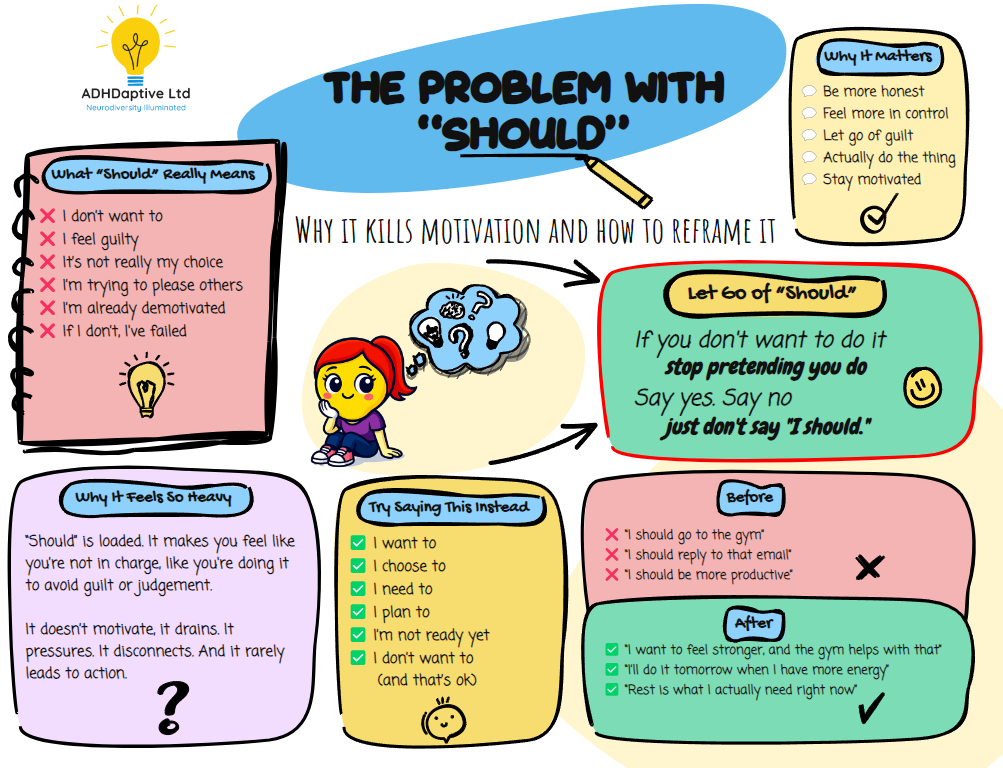
Alt tag: Visual breakdown of how “should” statements impact motivation, with alternatives that shift mindset from guilt to choice.
What “Should” Really Means
When you translate “I should,” you often get something like:
- “I don’t want to”
- “I feel guilty”
- “This isn’t really my choice”
- “I’m trying to please someone else”
- “I’ve already failed”
That’s a lot of emotional weight to carry over a gym visit or a to-do list.
No wonder we shut down.
Letting Go of “Should”
Here’s the alternative. Be honest.
If you don’t want to do something, stop pretending you do.
Say yes. Say no.
But don’t say “I should.”
It’s not about giving up. It’s about getting real. Real motivation doesn’t come from guilt. It comes from ownership.
Try Saying This Instead
Swap “should” for:
- “I want to”
- “I choose to”
- “I need to”
- “I plan to”
- “I’m not ready yet”
- “I don’t want to (and that’s OK)”
This small shift puts you back in charge.
No more vague obligation. No more chasing invisible
expectations.
You get to decide.
Real Talk: Examples
Let’s rewrite some classics.
Before:
“I should be more productive.”
“I should go outside.”
“I should meal
prep.”
After:
“I want to rest because I’m exhausted.”
“I’ll step out later if it feels
good.”
“I’m not cooking tonight. I’ll figure something easy tomorrow.”
Notice the tone?
It’s lighter.
More honest.
It gives you space instead of squeezing you.
Why This Matters (Especially If You’re Neurodivergent)
For people with ADHD or autism, “should” is a trap.
It pushes us into shame spirals.
It disconnects us from our energy, our preferences, and our actual
needs.
And it ramps up executive dysfunction like a switch.
When you let go of “should,” you:
- Stop pretending
- Start trusting your own signals
- Make clearer, kinder choices
- Reduce guilt
- Protect your energy
And you’re far more likely to do the thing.
Or not do it. And not hate yourself for it.
Final Thought

You don’t need to be more disciplined.
You need to stop bullying yourself with fake obligations.
Next time you catch a “should,” pause.
Ask yourself:
Do I want to?
Do I need to?
Is this coming from me, or from someone else’s voice
in my head?
Then say what’s true.
Because honest words make space for honest action.
And that’s where real motivation lives.
Still wrestling with the word “should”?
I’ve been there. I still catch myself some
days.
If you want to talk it through, or you're craving support that actually gets how your brain works,
come find me here.
We can throw out the rulebook together.
Further Reading
If you're curious about the psychology behind all this, there’s a great piece that goes deeper into the emotional weight of “should” thinking.
Why No Good Comes From the Word 'Should' – Psychology Today
It breaks down why these statements feel so heavy and how replacing them with clearer, more honest language can shift everything. Worth a read if this topic hits close to home.