
Happy Stressful New Year

It's my first working week of the new year, and after a break over Christmas and I'll be honest, it's tough getting motivated to get back into the swing of things. Yet, bills are mounting and working for myself, and there is no room for procrastination. I have to do this and give myself a big kick up the backside.

When I decided to give up my full-time job to found ADHDaptive, I always knew it would be tough. I knew that nobody would be spoon-feeding me with work and paying me money. I certainly have no regrets, though, and I am not going to give up. The feeling of being in control, the energy that comes from helping others, and deciding how and when I work is a revelation, and I don't want to give that up - I take that back, I can't give that up, as I know it will be the end of me.
One of the many things I have discovered is that my main motivation in life is pressure and deadlines, and without that, I will naturally move into procrastination mode and scroll my life away. Stress is a key motivator for me, and that's ok!
You may think that relying on stress and pressure as motivation is a negative thing, but I have come to realise that it isn't. Accepting that pressured situations are one of my key motivators is one of the most powerful things I have discovered.
In my old life, without understanding my neurodiversity, I was constantly stressed and, at the same time, trying desperately to avoid any pressures and pretending that I was ok. This took its toll on me mentally, more than I ever realised.
Stress is daunting, no doubt about that, and many people avoid stressful situations or run away from them; however, ironically, for people with ADHD it can also serve as a crucial motivator if you let it! You just have to understand, accept and embrace it.
Why we need to redefine stress
For many, the word stress immediately conjures up images of chaos, sleepless nights, overwhelming pressure and feelings of desperation and a reason to give up on life. No doubt about it, stress has a bad reputation. But in reality, stress is a natural part of life and part of being human. Stress is a psychological response which is actually designed to help us focus and act in the most challenging of circumstances. The key is to understand and harness it and not let it drag us down.
Good vs bad stress
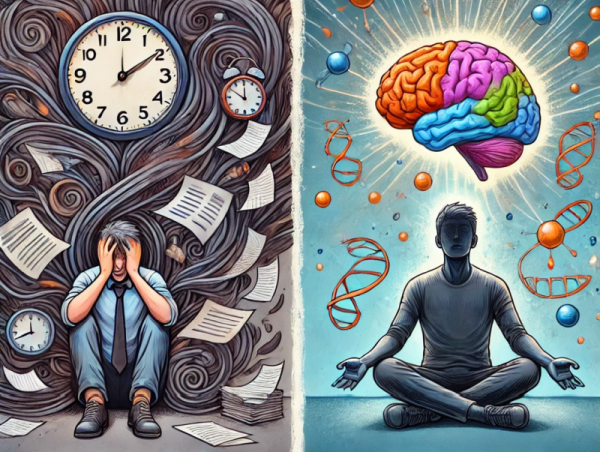
There are, broadly speaking, two types of stress - constructive stress and destructive stress.
Destructive stress is the type we associate with negativity. That situation where it becomes overwhelming, and that builds up too much when struggling with the 101 things that we have to do. As a result, we end up ignoring our boundaries and signals from our bodies that we should stop. We feel out of control. When this type of stress is left unchecked, it spirals, draining our energy, impairing our focus and leading to bad choices. Not surprisingly, this has a significant impact on our mental health and wellbeing.
Constructive stress, on the other hand, is the kind that propels us into motion, floods our brain with dopamine, and initiates our natural fight-or-flight response. This kickstarts our focus, creativity and motivation into overdrive and helps us push through those challenges.
Over the years, changes in culture, improved lifestyles, health, and technology have meant that we have become increasingly conditioned to see stress as destructive and inherently bad, losing sight of the reason we feel that way, which is to kickstart ourselves into dealing with a threat. The key is to flip that response back and understand that stress is our body's way of telling us, "This thing matters - we need to do something about it". Framing stress in this way means it becomes more about purpose and less about panic.
Stress is a catalyst for motivation
For me, discovering the difference between the two types of stress has been life-changing. Whereas in the
past, I thought of stress as a sign of weakness or failure, I now realise that it is a spark, a motivator
that can push me to do amazing things to be my very best.
Suppose you think long and hard about it, the
last time you tackled something daunting like a big presentation or a job interview. In that case, you'll
likely realise that stress played an important role in you being able to complete that task and take
action, irrespective of the outcome. Without stress, you may never have stepped up, never tried, never
really pushed yourself. Even if things don't work out, chances are that you learned from the experience.
There is an old saying that it is better to have tried and failed than not have tried at all. That's
constructive stress speaking!
The science bit

This isn't just me rambling as science backs this up too. Research has shown that a certain level of stress can enhance performance, which is often visualised through the Yerkes-Dodson curve (referred to as stimulation).
Low levels of stress can lead to boredom or procrastination, while moderate levels of stress optimise focus and productivity. It's only when stress tips into high levels that it starts to hinder our performance.
Despite what is often believed, the goal isn't to eliminate stress from our lives but to manage it and stay within that sweet spot where it is constructive, helping you rise up to the challenges and not give up.
Rethinking stress
Changing the way we think about and talk to ourselves and others about stress can make a huge difference. Instead of "I'm so stressed", try reframing it as "I am feeling the pressure because this thing is important to me.". Stress isn't our enemy, it is a catalyst to our success.
Before I was diagnosed with ADHD, I was feeling overwhelmed with destructive stress at work and at home, which led me to have a nervous breakdown, I was diagnosed with stress and anxiety, leading to me having a significant amount of time away from work. I could have given up at this point and spiralled into a cycle of lack of self-worth and despair. I knew this was happening, I could feel it, however something in me recognised what was happening. Why was I like this? This ultimately led me up a route, discovering my ADHD and founding ADHDaptive. The alternative would be to return to who I was before, doing the same job and ending up rinsing and repeating the cycle. I am so glad that this didn't happen.
Stress and Neurodiversity

For those of us who are neurodivergent, especially with ADHD and Autism, the relationship between those conditions and stress is extremely complicated and ultimately destructive if it isn't understood.
ADHD often brings heightened sensitivity to stress due to challenges with executive functioning, which affects our ability to plan, prioritise and manage our emotions. Frequently, this can lead to "normal" stresses that others may deal with more easily, provoking strong reactions and becoming overwhelming.
Yet, those same sensitivities can also make the rush of last-minute pressures incredibly motivating, creating the laser-like response known as "hyper-focus", where people with ADHD can perform exceptionally and often better than their neurotypical peers.
Similarly, autistic people often experience stress due to sensory differences and the need for structure and routine. Unexpected changes can usually trigger stress. However, that desire for clear expectations and familiar patterns can enhance focus and drive to overcome the challenge.
For those of us with ADHD or autism, the understanding that our stress reactions may be different and often more intense than that of others can be very empowering. It's important, though, to not fight against these natural tendencies and mask them; we can actually use them to our advantage. Recognising the types of stress that motivate us can help us (and also others) tailor our tasks in a way that allows us to excel.
The added benefit is that this should improve our mental health, as reframing stressful situations as opportunities and enhancing our natural tendencies reduce the risk of stress and increase our resilience.
Embracing Neurodiversity in All Aspects of Life
If we understand the interaction between neurodiversity and stress, we can change the way we feel about what it means to be stressed and realise that it's not removing stress from our lives that matters, it is understanding and managing it in a way that works with our unique neurological makeup. This not only demystifies stress but also celebrates the diverse ways that our brain operates.
Strategies to help harness stress
Prioritisation and time management
For those of us with ADHD, the sheer volume of
tasks that we are often faced with can be stressful. Some effective techniques and tools can help with
this.
Visual aids
Tools like planners, apps or timers can help us to break big, complicated
tasks down into smaller, more manageable chunks. This not only helps us to ensure that tasks are less
daunting but also reduces the likelihood of us failing and allows us to celebrate successes, no matter how
small, another great motivator.
Pomodoro Technique
This is a simple technique in which we break tasks down into small
chunks of time - typically 25 minutes, and then followed by a short break. The goal is to do 25 minutes
work rather than completing a specific part of a task. The benefit of this is that it helps us to maintain
energy levels and keep stress at more constructive levels, not allowing it to become destructive.
Create predictable routines
This is particularly helpful for many autistic people
where predictability can significantly reduce and manage stress.
Create a daily routine that incorporates all aspects of life, including work and relaxation to ensure that each day has a predictable rhythm of work and calm periods
Plan for potentially stressful situations by thinking about potential outcomes with appropriate responses and actions in advance. This helps to reduce the uncertainty of unexpected situations, which are often significant causes of stress.
Physical and mental rejuvenation
Managing our physical health can often have a
significant impact on how stress impacts our mental health. Regular physical exercise and mindfulness
practices improve our stress resilience.
Engaging in regular physical activity, such as walking, cycling, and other sports, has been shown to reduce anxiety symptoms and improve focus.
Meditation, yoga, and breathing exercises can help focus the mind, reduce feelings of stress and anxiety, and promote clearer thinking.
Adaptive tools and technology
There are many tools out there that can help
neurodivergent people manage destructive stress.
This includes apps and devices that can send reminders or alarms to help people keep on top of tasks, preventing them from being overwhelmed and reducing the stress of forgetting or missing deadlines.
For people with sensory sensitivities, technology such as noise-cancelling headphones can help concentration and reduce destructive stress in noisy environments.
Empowerment through self-awareness
Understanding personal triggers and reactions to
stress is crucial, as it allows one to make proactive changes. This involves self-reflection, which can
often be helped by keeping and reviewing a stress diary.
Identify triggers by recognising what situations trigger a destructive stress response and how you would typically respond. Being able to recognise destructive stress should help you to develop coping strategies that work for you.
Set yourself realistic expectations. Recognising and respecting your own limits is essential. This can be achieved through setting realistic goals which can prevent destructive stress from being overwhelmed by unrealistic expectations. It is also necessary to ensure that others acknowledge and respect your limits, so clear communication with others is crucial.
Final thoughts
I hope this discussion has illuminated that stress is not inherently negative and doesn't always need to be eliminated. Recognising the distinction between destructive and constructive stress is crucial. By identifying and managing destructive stress, we can allow constructive stress to become a significant motivator, enhancing our performance and mental wellbeing. In essence, when managed well, stress can lead to improved mental health, growth, and success.
Join the conversation
Have you found that stress can be a motivator in your life? Do you have strategies that help you harness stress positively? I invite you to share your experiences and tips in the comments below. Let's discuss how we can transform our understanding of stress to enhance our productivity and wellbeing.
If you're looking for more support or resources on managing stress with neurodiversity in mind, feel free to reach out to me directly here on LinkedIn, Facebook, or via our website.
Together, we can build a community that not only survives but thrives on the challenges we face.
Further reading
- Pomodoro Technique
- Yerkes-Dawson Law
- The Stress Management Society - Offers a comprehensive hub of resources designed to increase understanding and awareness of stress and well-being. They provide free resources, including posters, workbooks, and informative articles to help manage stress effectively. Visit The Stress Management Society
- British Red Cross - Provides guidance on understanding and dealing with stress. They offer activities to help identify stress patterns and manage stress effectively, which can be especially useful in learning how to transform destructive stress into a more constructive experience. British Red Cross Stress Management
- NHS Every Mind Matters - This page on stress from the NHS offers insights into recognizing stress signs, dealing with stress, and preventing overwhelming stress. It's a great resource for practical tips on managing stress healthily. NHS Every Mind Matters on Stress