Focus on… Chloé Hayden: The Autistic Actress Breaking Hollywood’s Stereotypes
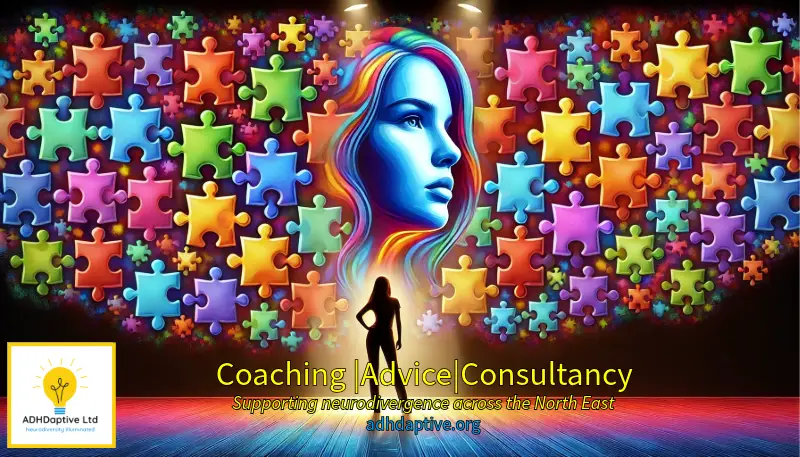
Note: Feature image used in the absence of freely available photos of Chloé Hayden. This illustration symbolises neurodiversity, empowerment, and advocacy within the community. If an official press image becomes available, it will be updated accordingly.
Who is Chloé Hayden?
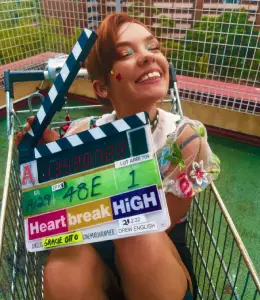
Chloé Hayden on the set of Heartbreak High, advocating for authentic autism representation in media. Follow her journey on Instagram @chloeshayden.
Autistic characters in the media have been butchered for decades, written by neurotypical people, played by neurotypical actors, and riddled with stereotypes that do more harm than good. Chloé Hayden is here to change that. With her groundbreaking role in Heartbreak High, an unapologetic online presence, and a mission to shake up the system, she’s redefining what it means to be neurodivergent in a world that has so often got it wrong.
You might well know her as Quinni from Netflix’s Heartbreak High, the first openly autistic character played by an actually autistic actor on mainstream Aussie TV. Or maybe you’ve read her book, Different, Not Less, a love letter to every neurodivergent person who has ever felt out of place. Either way, Chloé is proving that being different isn’t something to apologise for and that it’s something to own. Something that is very close to my heart.
But what’s the story behind the trailblazer? Let’s get into it.
Early Life: Finding a World That Made Sense
Chloé grew up in Australia, feeling like an alien on a planet she didn’t quite understand. Social cues? Confusing. Loud environments? Overwhelming. School? A nightmare. Like so many neurodivergent people, she spent her childhood feeling like she was constantly getting it wrong without knowing what exactly she was getting bad.
At 13, she was diagnosed with autism and ADHD, which finally gave her some answers, but this also came with the harsh realisation that the world wasn’t built for people like her, not in the slightest. Schools didn’t accommodate, and society misunderstood and support? Pretty much non-existent.
Like many of us in the neurodivergent community, she was bullied for being different, struggled with friendships, and found formal education unbearably overwhelming. Mainstream schooling wasn’t working for her, so she was eventually homeschooled, a move that gave her the space to breathe and learn in a way that actually suited her. For the first time, she wasn’t forced to fit into a system that made no sense to her. She was free to explore her interests and develop skills in her own way that would later become the foundation of her career.
But the isolation of being different still lingered. Where were the role models? Where were the stories of people like her, living whole, happy lives? The answer? Hardly anywhere. Well, actually, we ARE out here - it's just that we don't have a voice beyond our own echo chamber.
Instead of shrinking herself to fit in, Chloé did something different. She created her own world where neurodivergent people didn’t have to explain themselves, apologise, or pretend to be anything other than exactly who they are.
Career: From Social Media to the Spotlight
If you were online in the early 2010s, you might have come across Chloé before she was famous. She started sharing her experiences with autism and ADHD on social media, creating a space where neurodivergent people could finally see themselves represented and not in a ‘tragic burden’ kind of way or in a to be laughed at and ridiculed type of way. Still, in a ‘we’re actually pretty brilliant’ kind of way, which we all know is absolutely true!
Her online community exploded. People connected with her raw honesty, her humour, and the way she made
them feel seen. She spoke about the joys of hyperfocus, the struggles of sensory overload, and
the ridiculous things people say when they hear you have ADHD and Autism (‘But you don’t look
autistic!’ Oh, do tell me what autism looks like then? or Oh everyone is a little bit
She used platforms like YouTube, Instagram, and TikTok to not just talk about her own experiences, but to educate others on the realities of neurodivergent life. Her content broke down stereotypes, challenged outdated ideas, and most importantly, built a community where people felt understood.
Then came Heartbreak High. When she was cast as Quinni, an openly autistic character, it was a game-changer. For once, autism wasn’t being played as a stereotype. Quinni wasn’t a robotic genius with zero social skills, nor was she a helpless victim. She was vibrant, expressive, and, most importantly, real.
Unlike most autistic characters on TV, Quinni wasn’t written through the lens of a neurotypical scriptwriter making assumptions. Chloé worked closely with the show’s creators to ensure that Quinni’s experiences were authentic—her sensory challenges, her need for routine, her struggles with masking. It was the kind of representation neurodivergent people have been waiting for.
And let’s be honest, when was the last time mainstream TV showed an autistic character who actually liked being autistic? Exactly.
Author, Advocate, and Speaker
Beyond acting, Chloé is also an accomplished author. Her book, Different, Not Less, is a deeply personal memoir and self-help guide aimed at helping neurodivergent individuals embrace their identities. It has been praised for its honest, heartfelt storytelling and its message of empowerment.
She’s not just about representation in media. She’s out there making real change. As a public speaker, she’s delivered talks around the world, speaking on neurodiversity, accessibility, and the need for systemic change. Schools, workplaces, and organisations have started paying attention, realising that making the world more inclusive isn’t just nice—it’s necessary.
Her advocacy extends into pushing for better accommodations, calling out industries that still make life unnecessarily difficult for neurodivergent people, and reminding the world that accessibility should never be an afterthought.
Personal Life: Owning Her Identity
Chloé doesn’t just talk the talk—she lives and breathes neurodivergent pride. She’s been open about the ups and downs of being autistic and ADHD in a world that isn’t always kind to difference, but she’s also proof that you don’t have to ‘fix’ yourself to succeed. There is, after all, nothing to be "fixed" other than society's attitude to neurodivergence.
She’s spoken about the importance of sensory-friendly environments, of surrounding yourself with people who get it, and of unlearning years of masking (because pretending to be neurotypical is exhausting, I know from bitter experience how damaging a lifetime of masking can be). She’s also been a huge advocate for accessibility, calling out industries that still make life unnecessarily difficult for neurodivergent people.
Her message is simple but powerful: you are not broken. You are not alone. And no, you don’t have to be a genius or a ‘superpower’ stereotype to be valued. Being you is enough.
Why Chloé Hayden’s Work Matters
Representation in media matters. Not just for the neurodivergent kids who see themselves reflected on screen for the first time, but for the world at large. When stories like Chloé’s are shared, they challenge outdated ideas about autism and ADHD. They push for real change—whether that’s in schools, workplaces, or just the way people talk about neurodiversity. She gives the ordinary people a voice.
And the best part? She’s just getting started.
Chloé has already changed the landscape for neurodivergent representation, but her impact goes beyond
acting. She’s using her platform to call for better accessibility, more understanding, and a world where
neurodivergent people don’t have to ‘fit in’ to be accepted.
Neurodivergence in the Spotlight: Beyond Representation
Chloe Hayden’s honest portrayal of autism has reshaped how many people understand neurodivergent identity, especially in younger audiences. But not all public figures choose to speak out. In contrast, people like Liam Payne have shared their ADHD diagnoses as part of wider mental health journeys, while others like Emma Watson face public speculation without confirmation.
Let’s Talk About It

What do you think about Chloé’s impact? Have you ever seen a character on TV or in a book that truly felt like you? Do you think media representation is improving, or is there still a long way to go?
Let’s get the conversation going in the comments. And if you want to read more about neurodiversity, check out our https://adhdaptive.org/website for more articles, resources, and a community that gets it.
#ChloéHayden #AutismAcceptance #ADHDAwareness #Neurodiversity #Neurodivergent #HeartbreakHigh #AutismRepresentation #ADHDCommunity #DifferentNotLess #DisabilityAdvocate #InclusionMatters #ActuallyAutistic #AutisticPride #ADHDPride #RepresentationMatters #SensoryFriendly #MentalHealthAwareness #Accessibility #Masking #Hyperfocus
Further Reading
General Neurodiversity & Autism Resources:
The National Autistic Society (UK) – Provides support, guidance, and advocacy for
autistic individuals.
🔗 https://www.autism.org.uk
ADHD UK – Information, support, and resources for people with ADHD in the UK.
🔗 https://adhduk.co.uk
Neurodivergent Insights – Science-backed, accessible information on autism, ADHD, and
other neurodivergent conditions.
🔗 https://www.neurodivergentinsights.com
Chloé Hayden’s Website – Her official site, where she shares updates, blog posts, and
advocacy work.
🔗 https://chloehayden.com.au
Books & Audiobooks on Neurodivergence
Different, Not Less by Chloé Hayden – Her own book about embracing
neurodivergence.
🔗 https://www.amazon.co.uk/
Unmasking Autism by Dr. Devon Price – A guide to understanding masking and how to live
authentically.
🔗 https://www.amazon.co.uk/
ADHD an A-Z: Figuring it Out Step by Step by Leanne Maskell - Easy to digest and full to
the brim with practical life advice
🔗ADHD an A-Z: Figuring it Out Step
by Step : Maskell, Leanne: Amazon.co.uk: Books