Why Psychometric Tests Fail Neurodivergent Candidates
Neurodiversity in hiring?
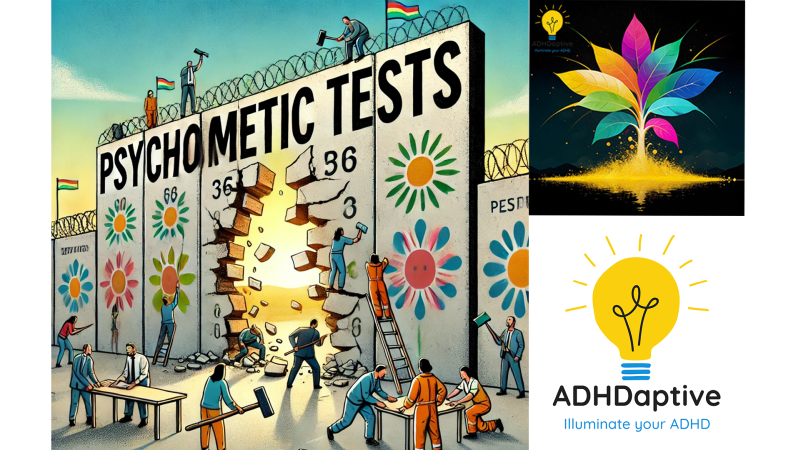
Neurodiversity in hiring? Psychometric tests fail neurodivergent candidates like those with ADHD, autism, dyslexia, or dyspraxia. These tests can feel like trying to fit into a box not built for you. Instead of showing what you are capable of, they can completely miss the mark, leaving your strengths and your potential misunderstood. tests are often praised as the answer to fair hiring. They are meant to remove bias, measure skills and potential objectively, and give everyone an equal shot. However, this is far from the reality.
Designed for “Normal”
Most psychometric tests are designed around what is considered typical brain function. Not everyone’s brain works the same way, and that is a good thing. But these tests are not built to see it that way. They are packed with time limits, vague questions, and scoring systems that assume everyone thinks and processes information in the same way.
If your brain works differently—maybe you are brilliant at spotting patterns but struggle to quickly choose between two bad options—these tests might not show what you are really good at.
Unfair Disadvantage
What ends up happening is that neurodivergent folks can get unfairly disadvantaged by these tests. You might be able to ace a job in real life, but the test says otherwise because it’s not built to understand your strengths. And guess what? That means you might not even get a foot in the door, which is not only unfair to you but a missed opportunity for employers who are missing out on some serious talent.
The Big Irony
These tests are supposed to help with diversity and inclusion. But if they’re pushing out neurodivergent candidates, they’re actually doing the opposite. It’s like saying you want a diverse team, but only if everyone fits into the same narrow mould. That’s not diversity, that’s exclusion in a very thin disguise. And that can be illegal. There have been cases where companies got into trouble for not adjusting these tests for neurodivergent candidates, showing just how problematic these “fair” tests can be.
A Better Way Forward
So what can we do about it? First, we need to rethink how much we rely on these tests. Maybe it’s time to develop better tools that account for different ways of thinking. Or maybe we just need to give less weight to these scores and focus more on other ways to see what someone brings to the table. After all, diversity is about embracing different perspectives, not squeezing everyone into the same box.
If psychometric tests aren’t cutting it, especially for neurodivergent folks, what’s the alternative? Here’s a breakdown of better approaches to create a fairer, more inclusive hiring process.
1. Work Sample Tests
One of the best ways to see if someone can do a job is to have them actually do part of the job. Work sample tests involve giving candidates a task or project that closely resembles what they would do in the role. This could be anything from drafting a mock report to solving a problem the company has faced before. Unlike psychometric tests, work sample tests are directly related to the skills and knowledge needed for the job, making them more relevant and less likely to disadvantage neurodivergent individuals.
2. Structured Interviews
Structured interviews are another great alternative. In these interviews, all candidates are asked the same set of questions in the same order, which reduces bias. The key is to focus on questions that explore real-life scenarios and problem-solving skills rather than abstract concepts that might be harder for some people to relate to. Structured interviews are more about how you think and less about whether you think in a “normal” way.
3. Personality Assessments (With a Twist)
While some personality tests can be problematic, there are ways to adapt them to be more inclusive. Instead of rigid, one-size-fits-all tests, consider using assessments that are more flexible and tailored. For example, instead of asking candidates to choose between fixed options, allow them to describe their preferences or behaviours in their own words. This method can give you insight into their personality without forcing them into a box.
4. Cognitive Task Simulations
For roles that require specific cognitive abilities, consider cognitive task simulations. These involve simulating real tasks that the job requires. For instance, if the job involves a lot of data analysis, a simulation might involve working with a set of data to find trends. These simulations can be designed to play to different cognitive strengths, ensuring that neurodivergent candidates aren’t unfairly penalised.
5. Peer and Team Assessments
Another approach is to include peer or team assessments as part of the recruitment process. In this setup, candidates participate in group activities or discussions that mimic the collaborative environment of the workplace. This allows you to see how they interact with others, how they contribute to a team, and how they solve problems in a real-world context. It also helps identify strengths that might not come through in a standardised test.
6. Adaptive Testing
If you must use psychometric tests, consider switching to adaptive testing. These tests adjust the difficulty of questions based on the candidate’s previous answers, creating a more personalised assessment experience. Adaptive tests can be more responsive to the individual’s abilities and less likely to penalise those who think differently.
7. Holistic Assessments
Finally, take a more holistic approach to hiring. Combine multiple types of assessments—such as work samples, interviews, and team exercises—to get a well-rounded view of the candidate. This approach reduces the reliance on any single test and gives candidates multiple ways to demonstrate their skills and potential.
Wrapping Up
Moving away from traditional psychometric tests doesn’t mean lowering standards, it actually means adapting your recruitment process to be fairer and more inclusive. By using these alternative methods, you can ensure that you’re not only hiring the best person for the job but also giving everyone a fair shot, regardless of how their brain works. That’s what true diversity and inclusion look like.